
Her på Blåvand's blog bringes korte nyheder i dagbogsformat om livet og hændelser på fuglestationen.
-
FORSIDE

- Blog
Much wind, some migrants
tirsdag 11. august 2026
Observation:
The first Merlin of the season was seen near the Lighthouse, coming in south from the dunes.
The migration counts were carried out during the standard protocol time - three hours after sunrise - and two and a half hours in the afternoon. Daily total wader count rises up to 1,031 individuals, with the dominant species being again the Oystercatcher, as is typical in westerlies. Anyway, some mixed groups made the day more interesting, and a nice group of 6 Ruffs with smaller Calidris was a nice surprise.
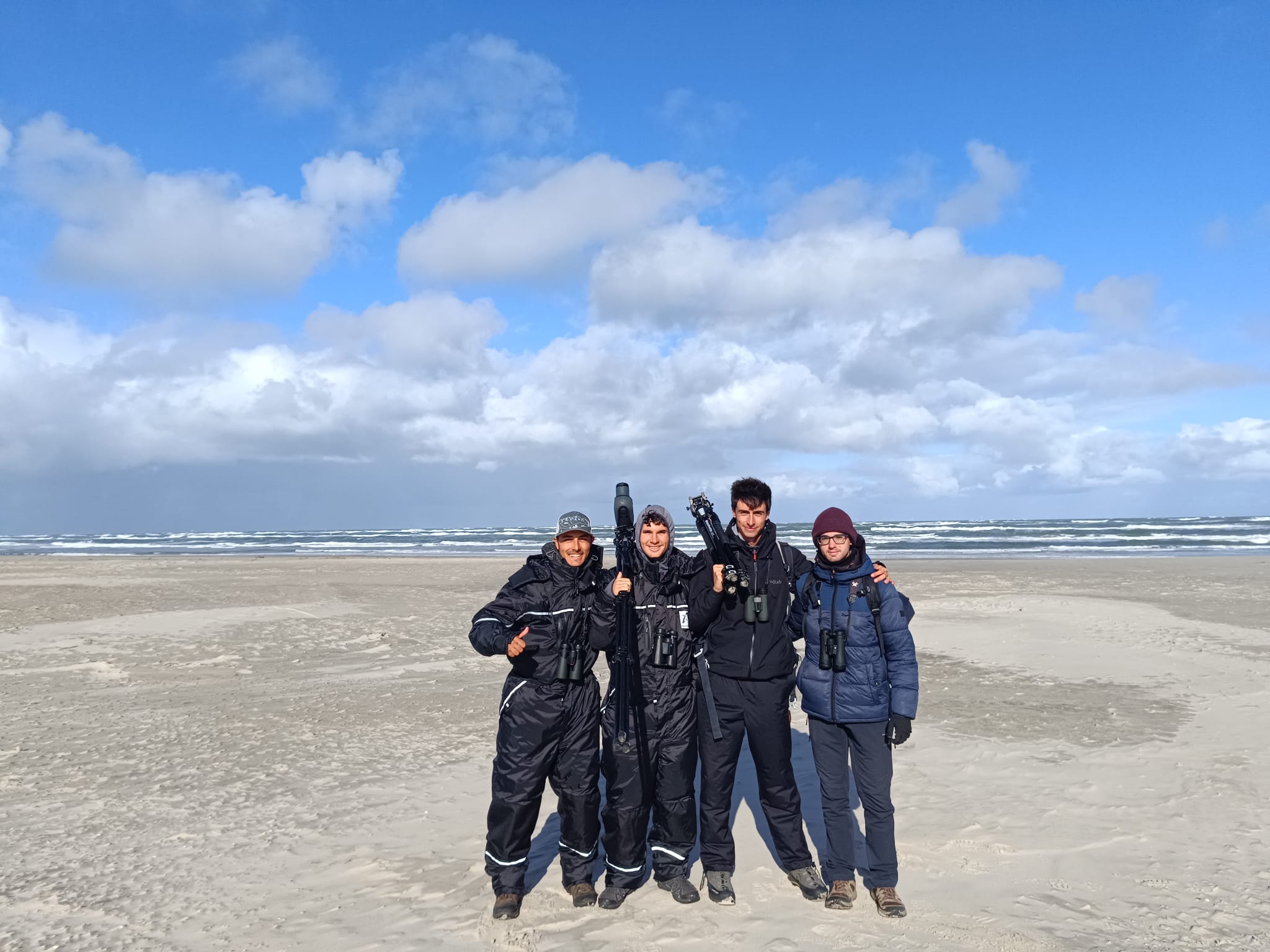
The Spanish team near the Sabine's Bunker after the morning count.
Seabirds gave some nice and close sightings with up to five individualised Arctic Skuas (with good pictures to upload!), juvenile Kittiwake and a juvenile Mediterranean Gull. The resting groups of gulls holded less Caspian Gulls than the previous days.
Ringing:
Strong winds meant that, for the second day in a row, we had to abandon any hope of obtaining standardized ringing in the morning. Instead, we tried for some nightcatching, though we did not end up cathing anything bird-sized that was actually a bird; however we did find a giant moth!
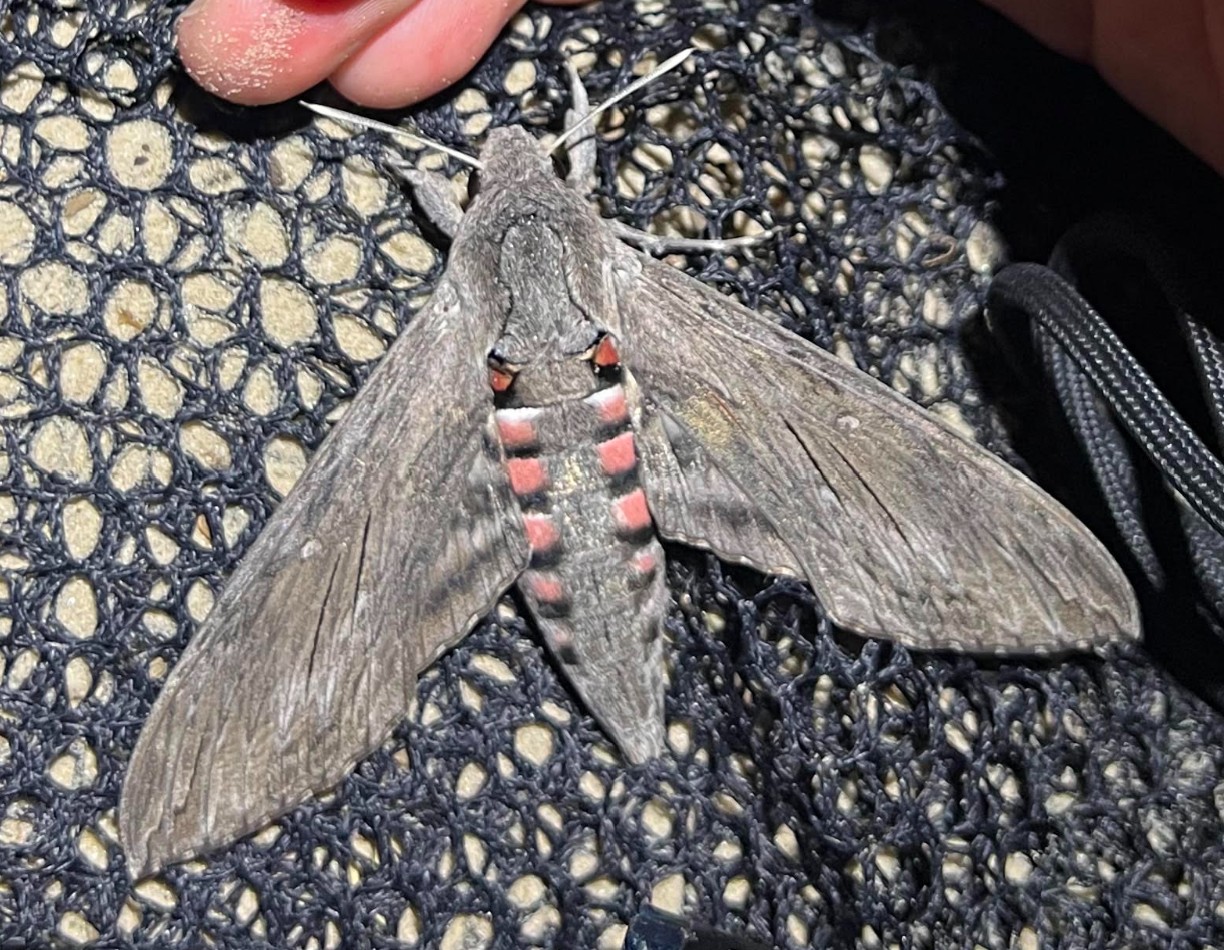
Convolvulus Hawk-Moth found during night-catching. Foto: Ida Bek
After returning home and getting the chance to sleep in, we awoke to the winds still going strong, and it was only after noon that they had died down enough for us to be able to open some of the nets down at the station garden. Throughout the rest of the day, we were thus able to relax inside between (mostly empty) short rounds to the nets. Though we did not catch many birds, the birds we did catch were very nice, with especially the second Pied Flycatcher (Ficedula hypoleuca) and the first Tree Pipit (Anthus trivialis) of the season giving us hope for more migrants to come.
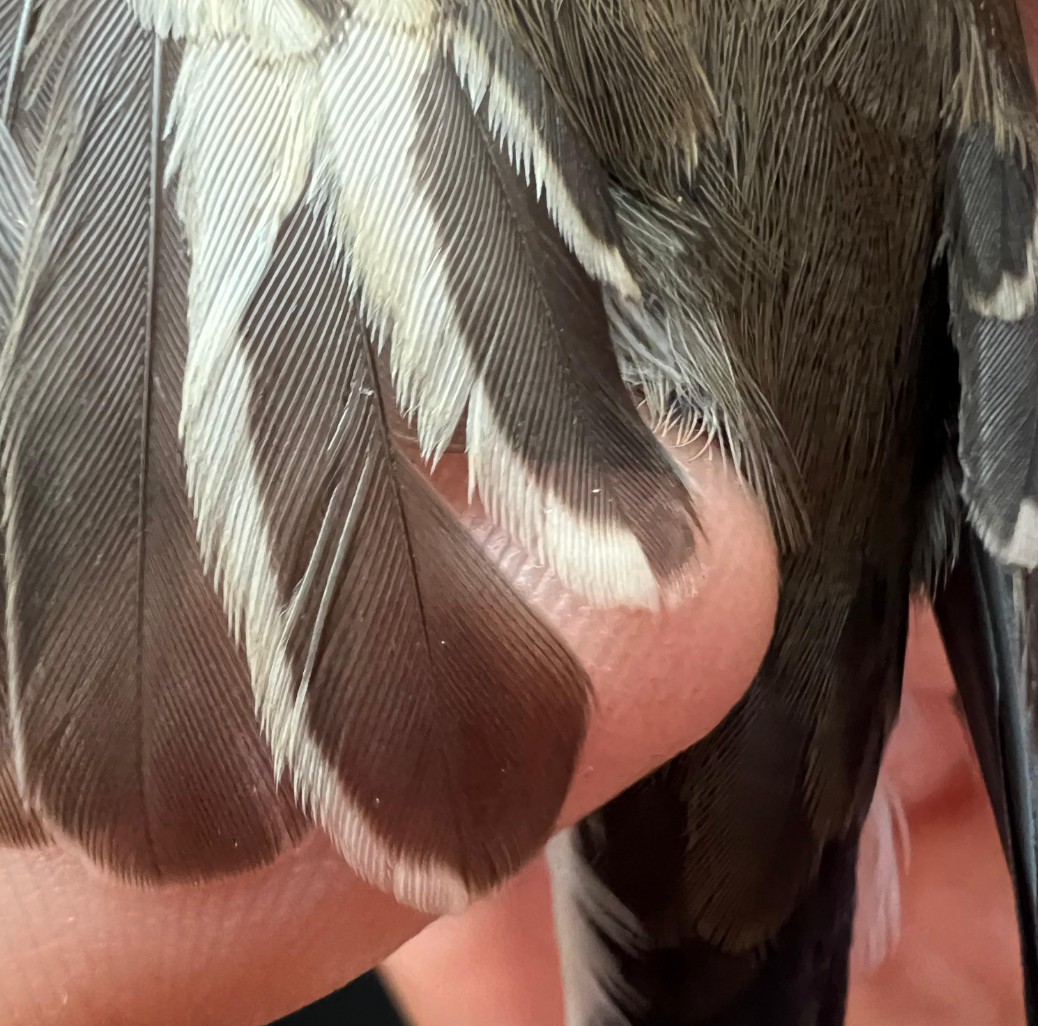 At this time of year, we use the shape of the white pattern on the middle tertial to age Pied Flycatchers. If there is a notable step, it is a 1cy bird (hatched this year), and if the white edge is smooth, it is 2cy+ (hacthed last year or ealier). Foto: Ida Bek
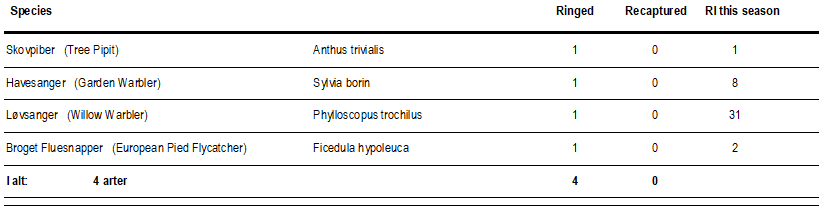
Today's captures:
At the station: David, Miguel, Nico, Lois, Alba, Johan, Ida