
Her på Blåvand's blog bringes korte nyheder i dagbogsformat om livet og hændelser på fuglestationen.
-
FORSIDE

- Blog
Black Tern and a Brown Bagworm
fredag 1. maj 2026
Observations :
The highlight of the day was a magnificent black tern [sortterne] heading south whilst feeding!
It was another first for me; I’m really happy because it was one of the species I wanted to see during my stay in Blavand, and now I’ve seen it :)
This gave me the opportunity to find out a bit more about its behaviour and its range.
Like so many other species, this species is in sharp decline across most of Europe. Like many others, it is threatened by the destruction of its habitats. The black tern nests in colonies on bodies of fresh water: marshes, lakesides or riverbanks. A variety of human-induced factors threaten these habitats: land development involving the drainage of wetlands, as well as water pollution and eutrophication.
This reminds us of our collective responsibility, and the responsibility of the policies put in place to best preserve the remaining habitats. Especially as bird lovers and birdwatchers, we can also play an active part in these conservation efforts at our own level.
There you go, all these thoughts just from observing this very special black tern! I’ll leave you with the other cheerful news of the day after this little 15-minute political interlude !
Todays observations can be seen here.
Ringing :
Some birds in the nets today: We are using a lot of F-Rings, as we have many Chiffchaffs “Gransanger” and Willow Warblers “Løvsanger”. One 3k+ Lesser Whitethroat caught our attention: It already had a Danish ring, t I did not recognise the ring number. Maybe a foreign Danish recapture? It turned out that the bird was ringed at Blåvand, but in 2022 by Morten!
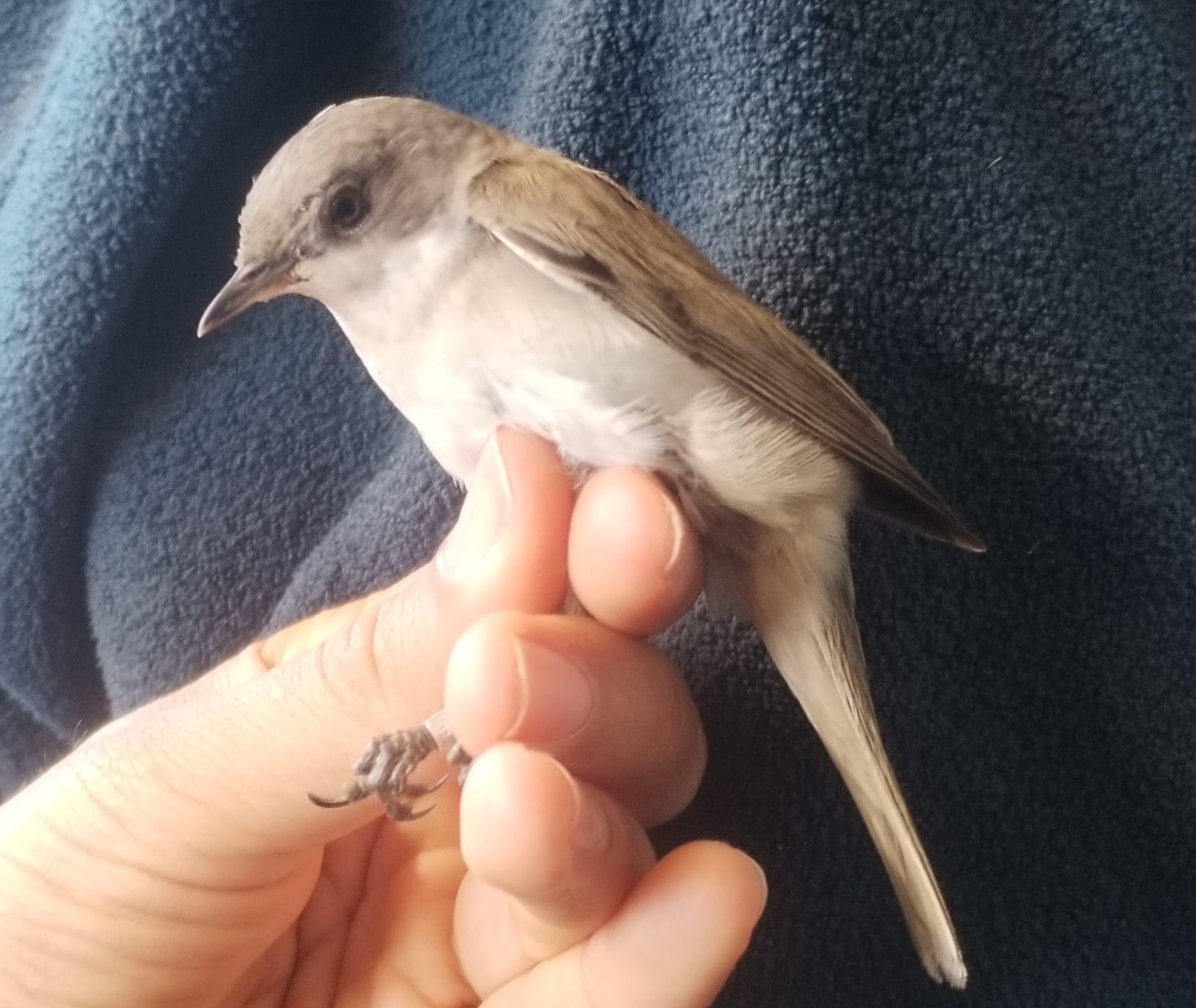 Lesser Whitethroat "Gærdesanger". Picture by Hanelie.
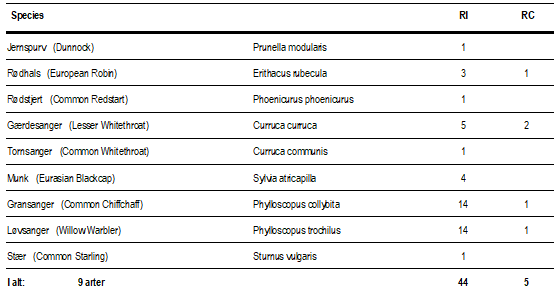
Since then, it regularly returned to Blåvand to breed and was recaptured several times every year.
In the afternoon, I went to Grønningen. There were not many birds, but I saw my first Swift “Mursejler” of the season. Also one Spoonbill “Skestork” was feeding at a pond.
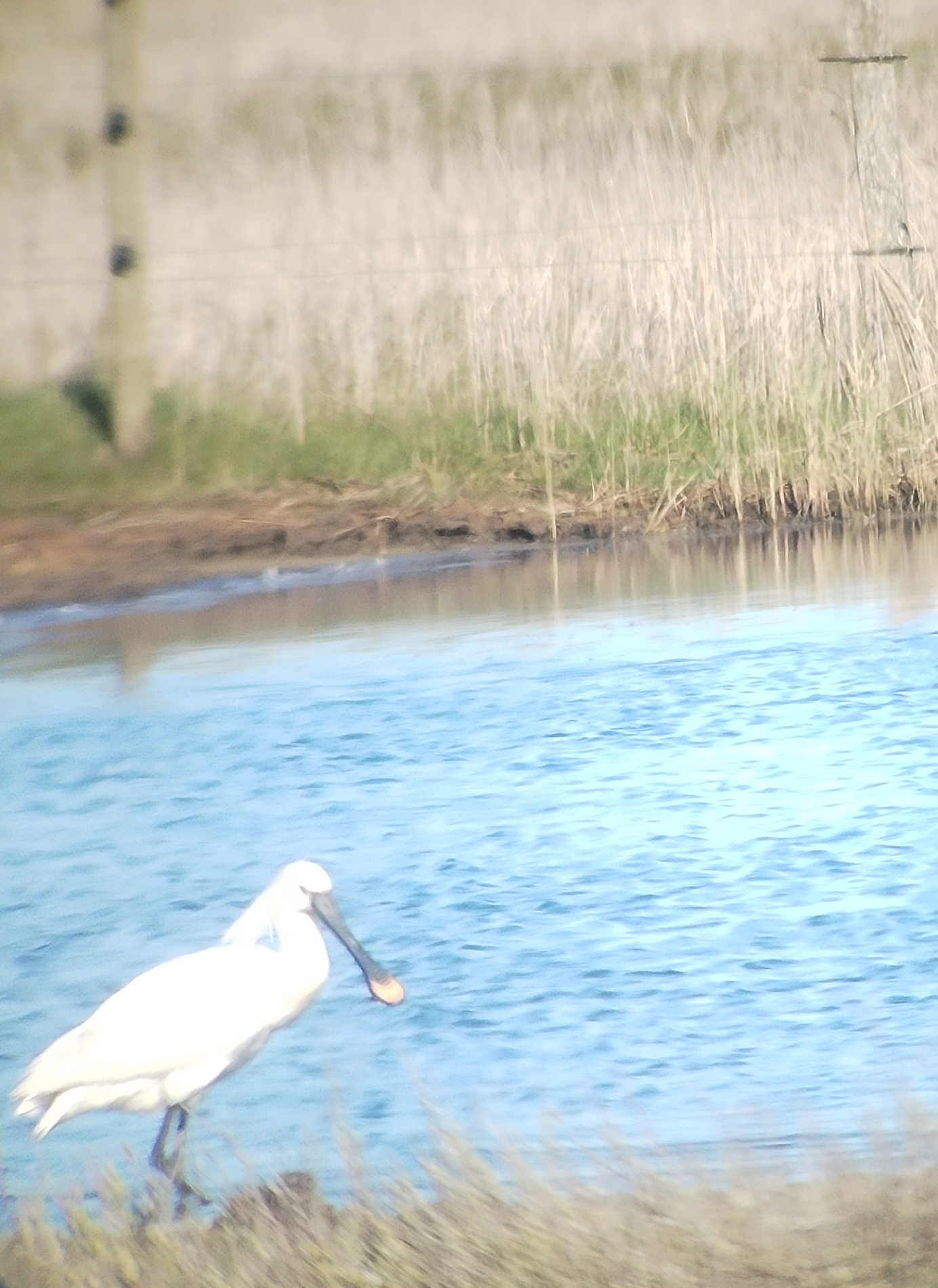 Spoonbill “Skestork”. Picture by Hanelie.
Little tern project :
This morning, Joseph and I went to the exclosure together for the first observation of the Little Tern project. Based on last year’s results, our expectations for the first day were low. Those expectations were not unfounded, because during the entire observation we saw a total of approximately 15 little terns flying, only 4 of which landed in the exclosure. Two of them were ringed (one color ring and one metal ring).
Fortunately, there are other species that can also use the exclosure. For example, we saw the first Common Ringed Plover (Stor præstekrave) that had already built a nest and was incubating her eggs, which was lovely to see.
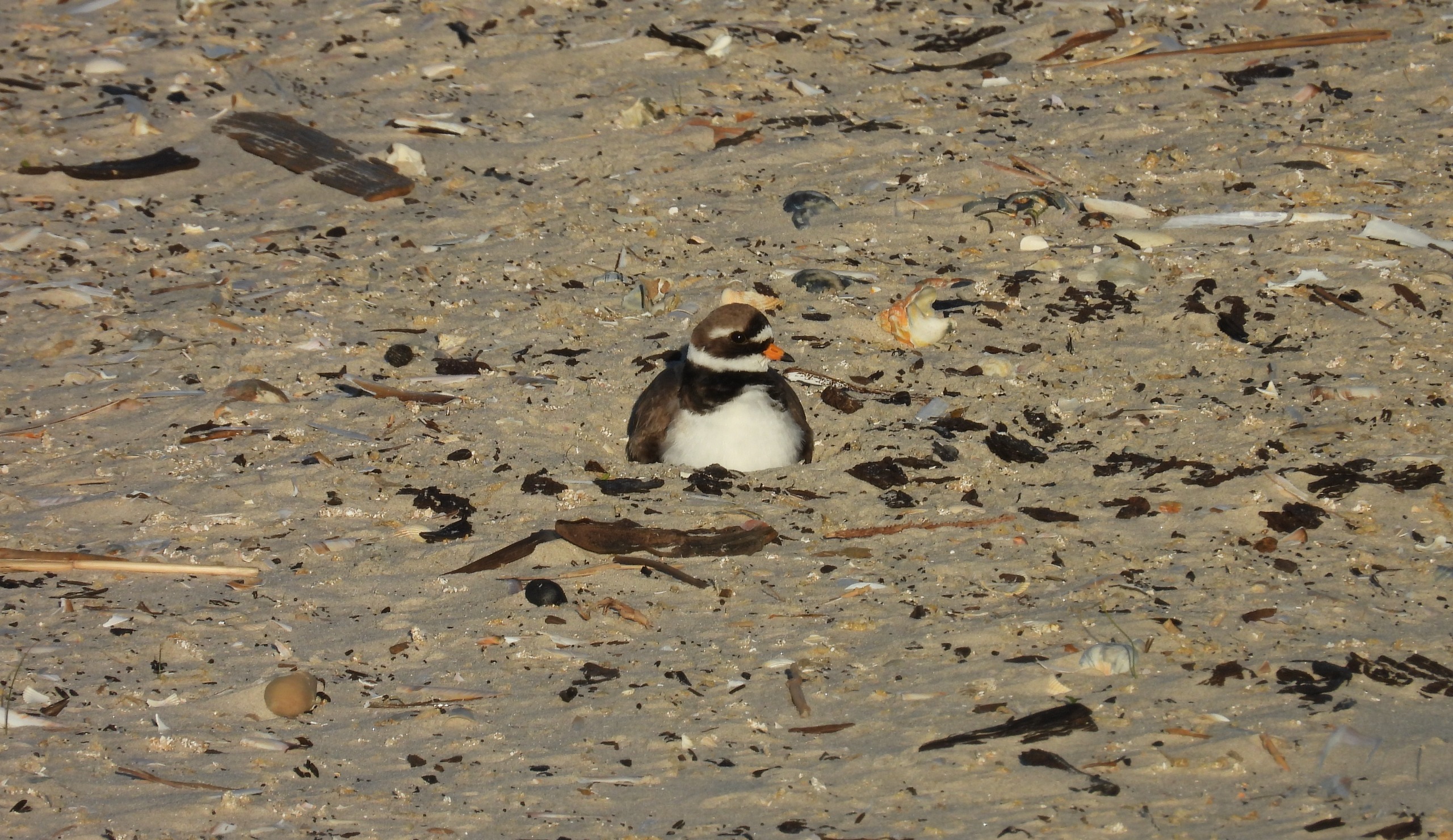
A Common Ringed Plover (Stor præstekrave) incubating on her nest, Picture by Joseph Stephan.
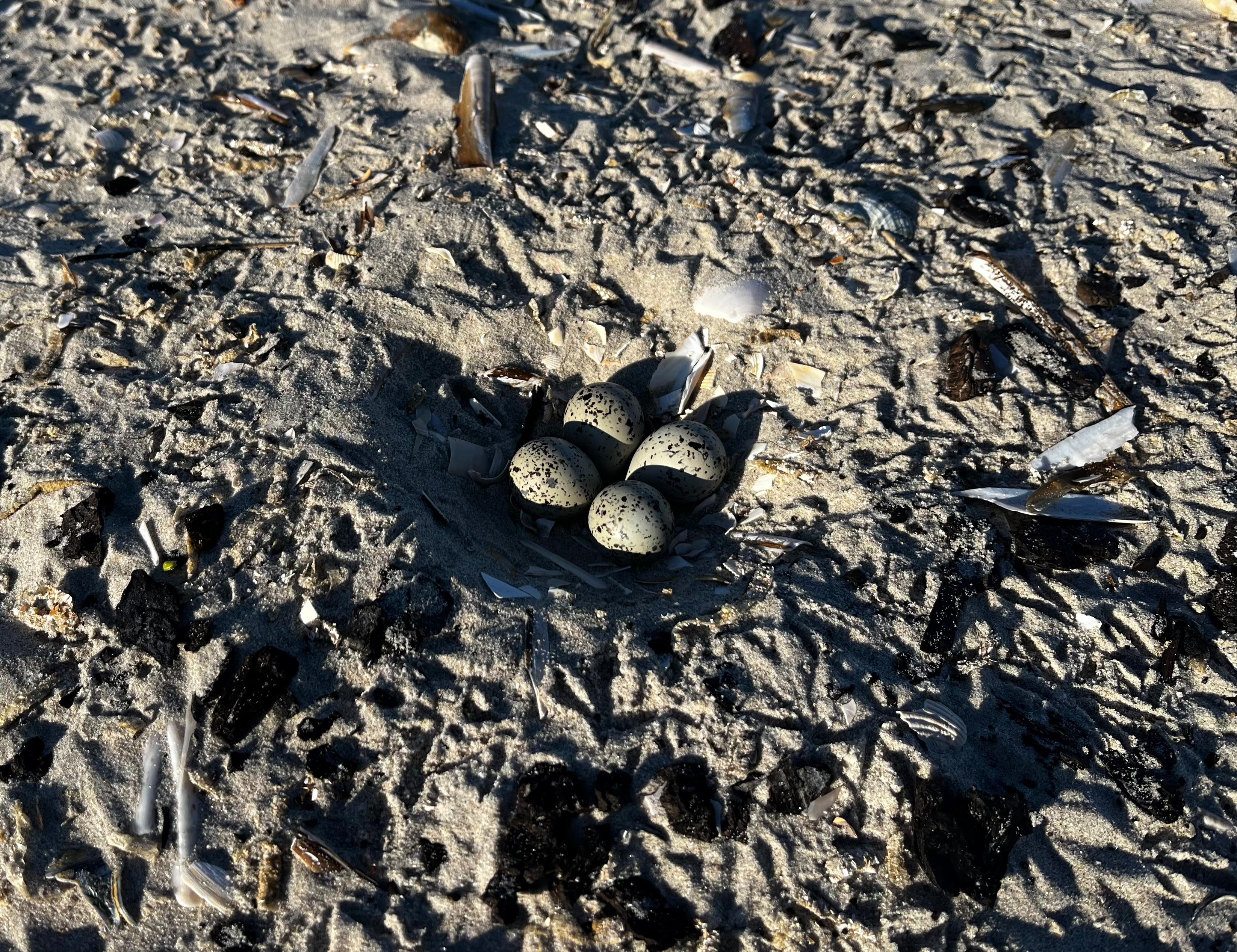
The nest of the breeding Ringed plover, Picture by Joseph Stephan.
Moths of the day :
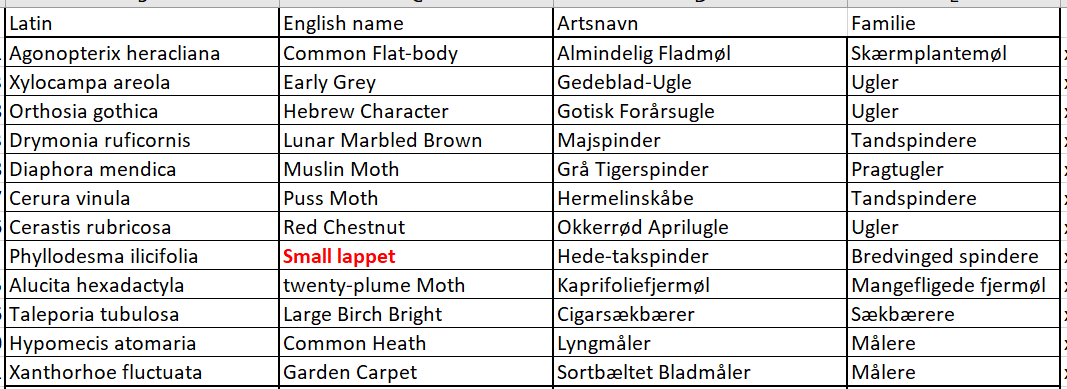
Today we found 12 different species. Three were new for the location this year: the Common Heath (Lyngmåler), the Garden Carpet (Sortbæltet Bladmåler) and the Large Birch Bright or Brown Bagworm (Sigarsækbærer). This last one is a bit of a strange moth. The caterpillars feed on lichen, but they may also eat plant remains. They live in a protective casing made of grass or bark that is usually attached to a tree. The females remain in this casing when adult and have no wings. I have found it in Gjerrild (Djursland) where I live and now also here. The species is found everywhere in Europe including for instance Scotland. When writing this I got a question. How do they move from one area to another, are the females just walking or is there another way of dispersion?
Red in the table are rare species for Denmark.
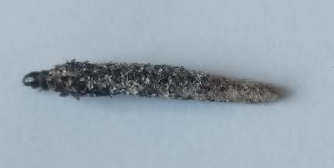 Large Birch Bright or Brown Bagworm (Sigarsækbærer)
At the station: Robert Luttik, Morten Jenrich Hansen, Hanelie Sidhu, Joseph Stephan, Clara Delahaye, Jorn de Jong and David Manstrup.